

Design for Wellbeing Conference

background


Wellness Workplace:
A Symbiotic Vision of Wellness, Science, and Sustainability 

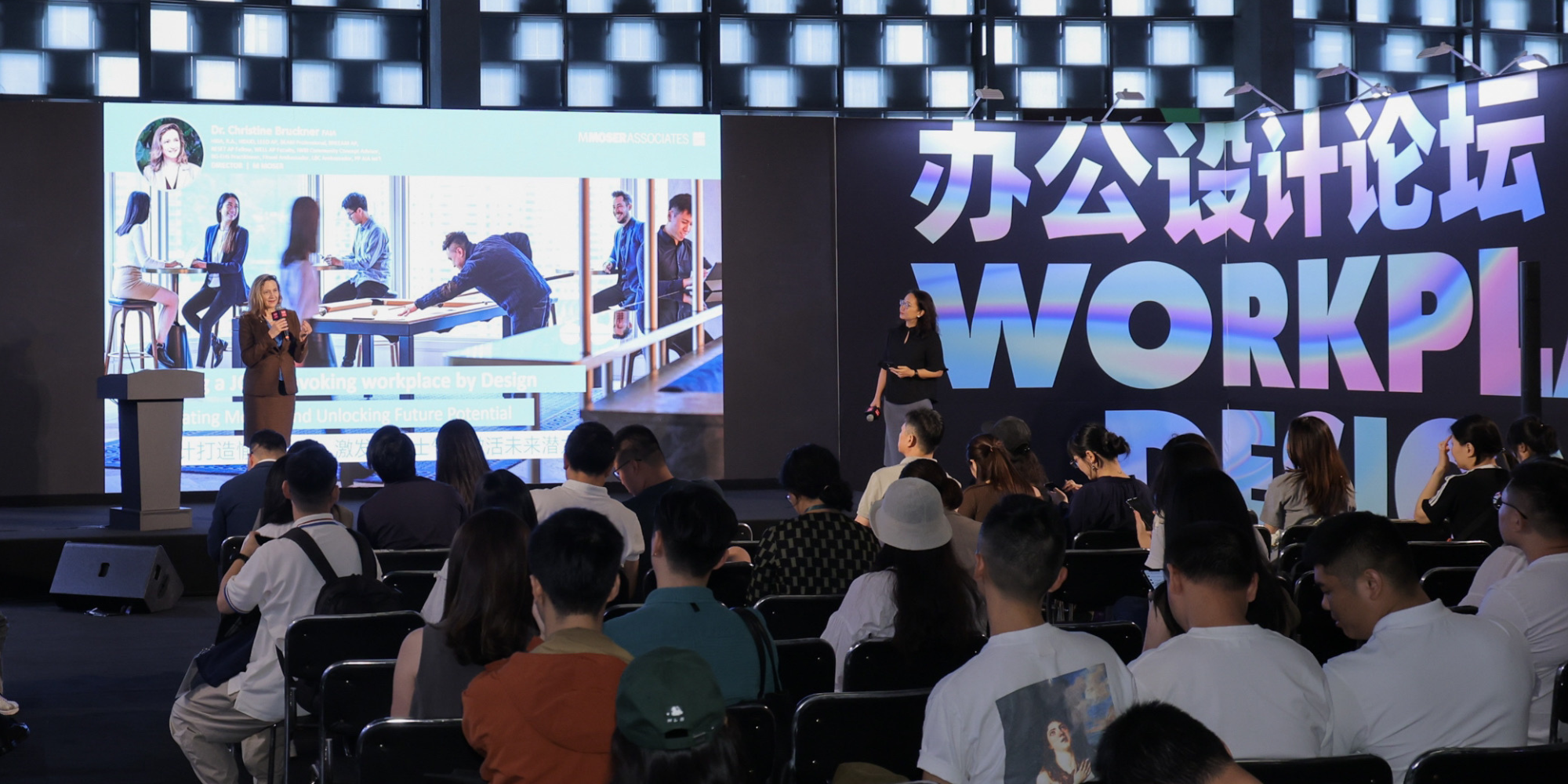
The Design for Wellbeing Conference will explore how to build livable lifestyles and shape a harmonious new ecology of livability in the ever-changing environment. The three-day conference will cover a range of issues. Prestigious experts from the fields of architecture, design, real estate, healthcare, furniture, and materials will gather and discuss how to create a new workplace ecology of harmonising space and reshaping the relationship between people and the environment through a design lens. Numerous well-known workplace and healthcare brands and service companies will display their latest products and cutting-edge solutions. This conference is free to access for all Design Shanghai ticket holders.
View Full Schedule

Design for Wellbeing Conference 2026 Theme

Wellness Workplace: A Symbiotic Vision of Wellness, Science, and Sustainability

Morning subways, climate-controlled offices, the constant glow of screens… Day after day, we enter these precision-tuned efficiency factories, yet so often feel the absence of something gentler. When stress lingers in the air like background static and weariness settles into muscle memory, we start to wonder: Could our buildings be healers, not just containers? Could our workplaces become sanctuaries for well-being, not just arenas of output?

Design, at its heart, is a quiet act of care. It’s in how a window frames the morning sun, how airflow carries a hint of garden, how a chair supports a tired body, how acoustic calm protects a train of thought. Today’s most forward-looking design is moving beyond form and function—toward spaces that respond to breath, rhythm, and feeling.

That’s why, in March 2026, Design Shanghai will partner for the third time with the International WELL Building Institute and the Well Living Lab to present the Design for Wellbeing Conference. This year’s theme—“Wellness Workplace: A Symbiotic Vision of Wellness, Science, and Sustainability”—invites a deeper conversation about what comes next.

We believe lasting change starts with thinking in systems. Over three days, the Conference will guide you from the “Essence of Design” to “Future Habitats,” unfolding a complete vision for well living through a thoughtful, layered progression.


Key Sub-Themes Across a 3-Day Conference

Day 1  

The Origins of Design: Healthy Symbiosis in Space

Focus: How the WELL Building Standard shapes design logic and advances healthy spaces from concept to practice.
Every healthy design begins with what cannot be seen. We will explore how the WELL standard establishes benchmarks, and how testing institutions verify them—affirming the core idea that health can be measured.
 

Key Topics:

  1. WELL v2: A Universal Language for Designing for Health
  2. Jing An Kerry Centre - WELL the Great Minds Meet
  3. The Invisible Truth: How Testing Data Defines a Sense of Safety

Day 2

Foundations of Evidence: Scientific Validation and Innovation in Healthy Environments

Focus: This session examines research methodologies in spatial science and how data can drive healthier environments.
Using evidence, we will show how visual quality (forests), lighting, and posture (ergonomics) can directly enhance workplace efficiency and cognitive performance.
 

Key Topics:

  1. Cultivating Healthy Buildings in the Lab
  2. Bringing the Forest into the Mind
  3. Designing for the Body: Ergonomics and Dynamic Workplaces
  4. Scientifically Validating the ‘Health Value’ of Spatial Quality
  5. WELL Living Sustainability and Health Perspectives Report: From Healthy 
  6. Green Is the Foundation of Health: The Duet of ESG and WELL
  7. JOY Report: Building Spaces of Psychological Resilience Amid Uncertainty

Day 3

Future Habitat: The Awakening of Perception and a Social Manifesto

Focus: Healthy lifestyles and sustainable operations invite us to explore new frontiers of WELL in community, nutrition, mental health and spiritual well-being.


Key Topics:

  1. Decoding and Translation: Turning a Human-Centered Ethos into Product Language
  2. Frequency as Remedy: Spatial Acoustics and Music Healing
  3. Meditation Experience in an Acoustic Environment
  4. WELL EAT: The Ecology of Health at the Table